n high tech critical clean facilities, even small issues can have significant consequences. Dust accumulation, neglected surfaces, inconsistent cleaning schedules, and overlooked maintenance areas can contribute to equipment performance issues, operational disruptions, and increased costs over time.
That’s why leading facility managers view cleaning as more than a maintenance function—they see it as part of their risk management strategy.
A preventive cleaning program helps create cleaner, safer, and more reliable environments that support operational uptime and long-term facility performance.
Why Uptime Matters
Whether managing a data center, advanced manufacturing facility, research laboratory, or controlled production environment, operational continuity is critical.
Unexpected interruptions can impact:
- Productivity
- Equipment performance
- Employee efficiency
- Project timelines
- Customer commitments
- Operating costs
While many factors influence uptime, facility cleanliness plays an important supporting role in maintaining reliable operations.
The Difference Between Reactive and Preventive Cleaning
Many facilities unintentionally operate in a reactive mode.
Problems are addressed after they become visible:
- Dust buildup becomes excessive
- High-touch surfaces are neglected
- Floors show signs of wear
- Air vents become obstructed
- Common areas require emergency attention
Preventive cleaning takes the opposite approach.
Rather than responding to issues after they occur, routine cleaning schedules help address potential concerns before they impact the facility.
How Preventive Cleaning Supports Operations
Reduces Dust Accumulation
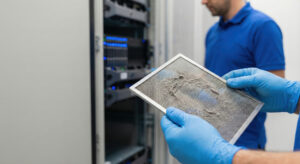
Dust is one of the most common challenges in critical environments.
Over time, airborne particles can accumulate on:
- Floors
- Workstations
- Equipment-adjacent areas
- Ventilation systems
- Storage spaces
Routine cleaning helps reduce buildup before it becomes a larger concern.
Supports Equipment Performance
Sensitive equipment performs best in well-maintained environments.
While cleaning teams typically avoid servicing equipment directly, maintaining surrounding spaces can help reduce environmental factors that contribute to unnecessary wear and maintenance concerns.
Improves Workplace Safety
A cleaner facility supports safer daily operations.
Preventive cleaning can help reduce:
- Slip and trip hazards
- Clutter accumulation
- Dust-related concerns
- Sanitation issues in shared spaces
Clean facilities contribute to a stronger safety culture.
Creates Consistency Across the Facility
One of the biggest benefits of preventive cleaning is predictability.
Facility managers gain confidence knowing that cleaning activities are being completed consistently rather than only when issues become noticeable.
Consistency helps support operational standards and creates a better experience for employees, visitors, and vendors.
Key Areas That Benefit from Preventive Cleaning
Entrances and Transition Zones
These areas often experience the highest levels of traffic and contamination.
Production and Work Areas
Regular cleaning helps maintain professional, organized environments that support productivity.
Common Spaces
Breakrooms, restrooms, and shared workspaces require routine attention to maintain cleanliness and employee satisfaction.
Mechanical and Infrastructure Areas
Scheduled cleaning helps maintain cleaner conditions around critical building systems and support spaces.
The Long-Term Financial Benefits
Preventive cleaning is often more cost-effective than reactive cleaning.
Benefits may include:
- Reduced emergency service needs
- Improved facility appearance
- Better employee satisfaction
- Support for equipment longevity
- More predictable maintenance budgets
A proactive cleaning strategy helps facilities avoid many of the costs associated with deferred maintenance.
Building a Preventive Cleaning Program
An effective preventive cleaning program should include:
- Defined cleaning schedules
- Documented procedures
- Routine inspections
- Clear communication
- Flexible service plans that align with facility operations
The goal is to create a reliable system that supports daily operations while minimizing disruption.
Protecting Critical Environments Through Prevention
At Direct Clean Service Solutions, we help facility managers implement preventive cleaning programs designed for high tech critical clean facilities.
Our team works proactively to maintain cleaner environments, support operational goals, and help facilities reduce risk through consistent, reliable service.
Looking to strengthen your facility’s preventive cleaning program?
Contact Direct Clean Service Solutions to learn how a customized cleaning plan can help support uptime, safety, and operational performance.