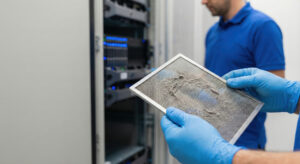
Data centers are among the most critical environments in modern business operations. Even minor dust accumulation can impact airflow, cooling efficiency, equipment reliability, and long-term performance.
Why Dust Is a Serious Risk in Data Centers
- Airflow disruption
- Increased heat buildup
- Reduced cooling efficiency
- Premature equipment wear
- Increased maintenance costs
Common Areas Where Dust Accumulates
- Server racks
- Raised floor systems
- Cable trays
- HVAC returns
- Mechanical rooms
- Power distribution areas
How Professional Data Center Cleaning Helps Protect Uptime
Improves Airflow
Clean environments support efficient cooling and temperature control.
Supports Equipment Reliability
Reducing dust exposure helps minimize preventable issues.
Reduces Maintenance Interruptions
Routine cleaning can help identify facility issues before they escalate.
Creates Safer Working Conditions
Cleaner environments support technicians and vendors working within the space.
Best Practices for Data Center Cleaning
- Scheduled cleaning programs
- HEPA-filtered equipment
- Raised floor cleaning
- Careful work around active systems
- Coordination with facility teams
What to Look for in a Data Center Cleaning Partner
- Experience in mission-critical environments
- Flexible scheduling
- Security awareness
- Detailed documentation
- Consistent communication
Conclusion
A proactive cleaning program is one of the simplest ways to help protect uptime, support equipment performance, and maintain a reliable operating environment.